

Method 1: Embedded Signup (recommended)
Embedded Signup is the fastest way to connect. You log in to your Facebook account, select the number, and you are done.1
Open the dashboard and create a new instance
In the Zapster dashboard, click Create instance and select the WhatsApp Business (Official) option.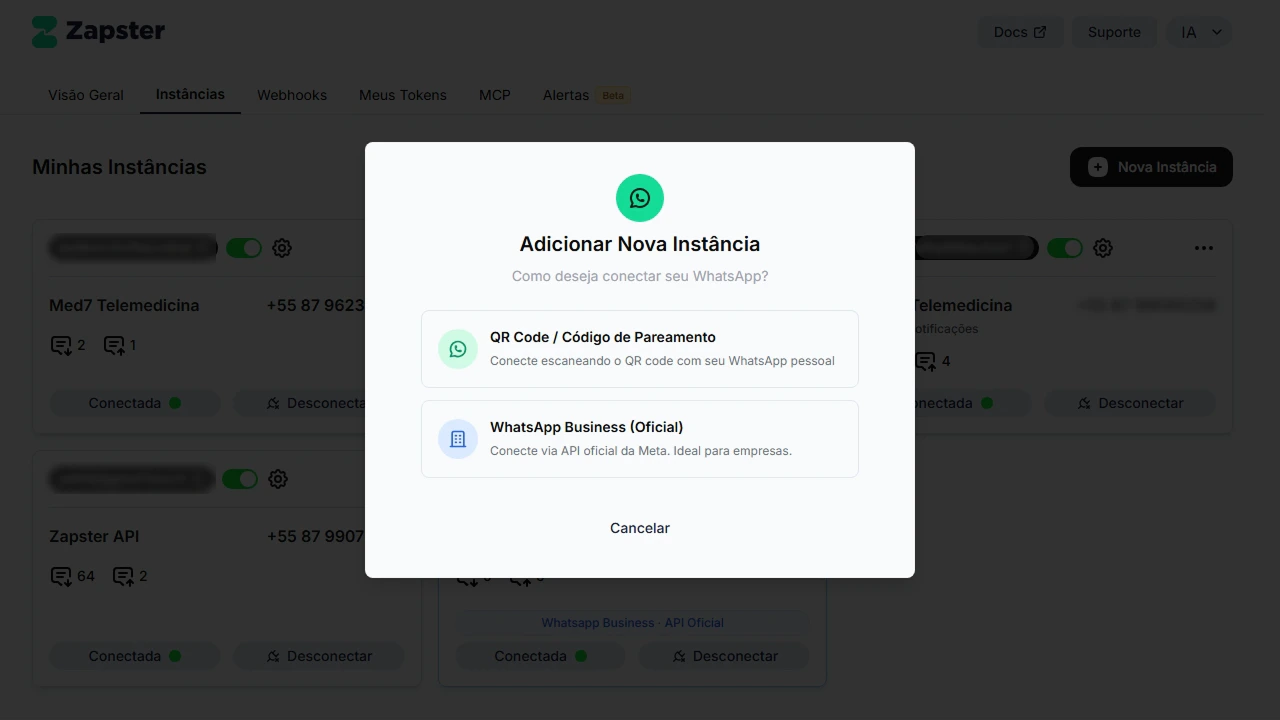
2
Connect with Facebook
Click the connection button. A Facebook window will open asking you to log in.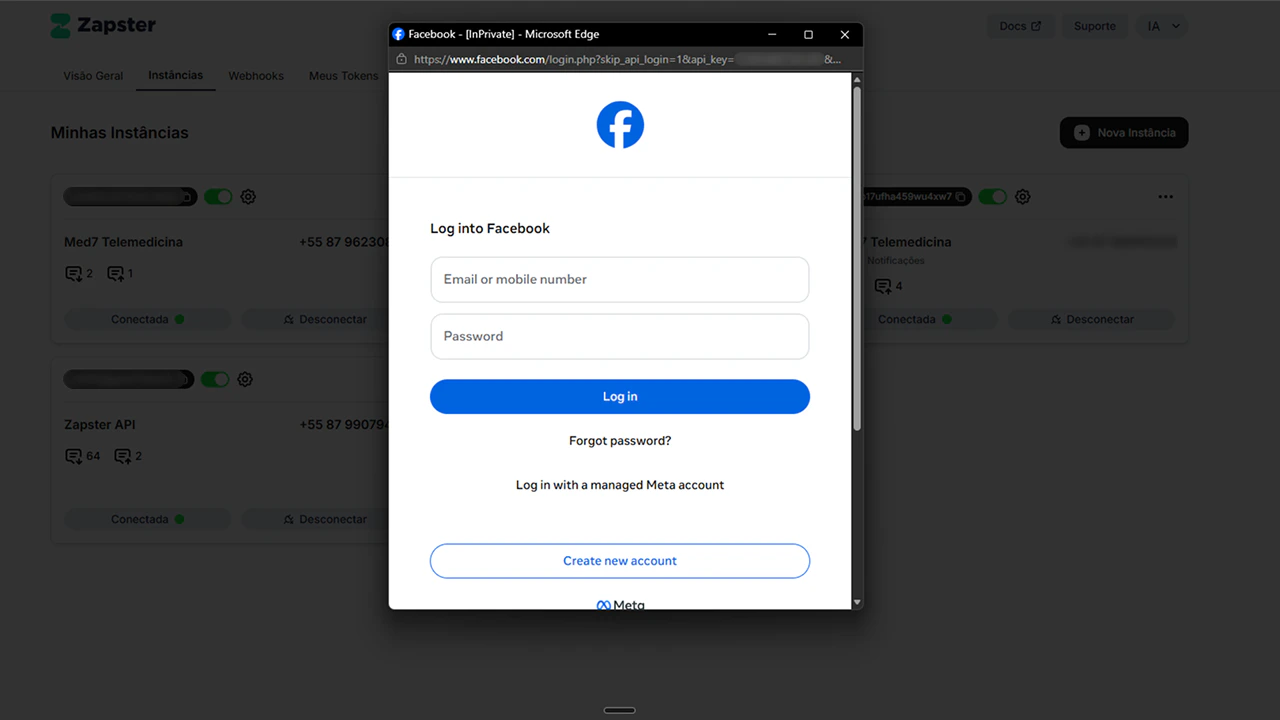
3
Select your WhatsApp Business account
Choose the WhatsApp Business account you want to connect. If you do not have one, you can create it during the process.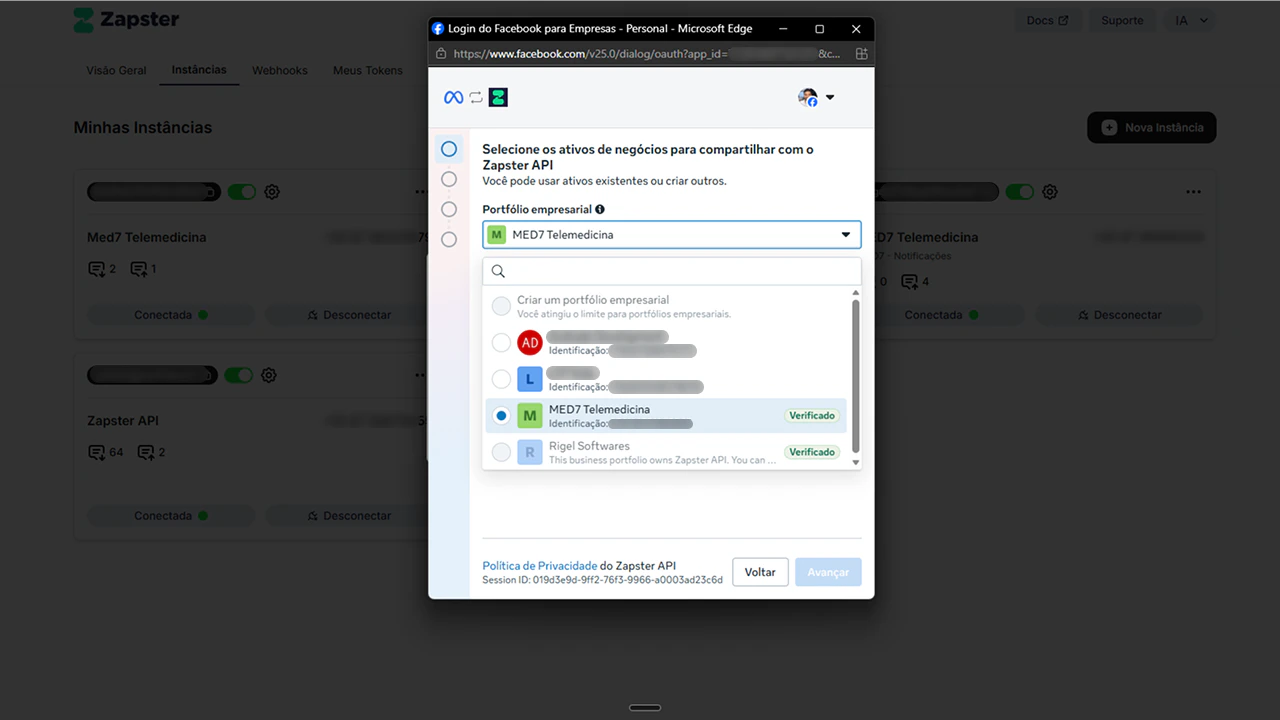
4
Select the phone number
Choose the number that will be connected to the instance. The number must be verified with Meta.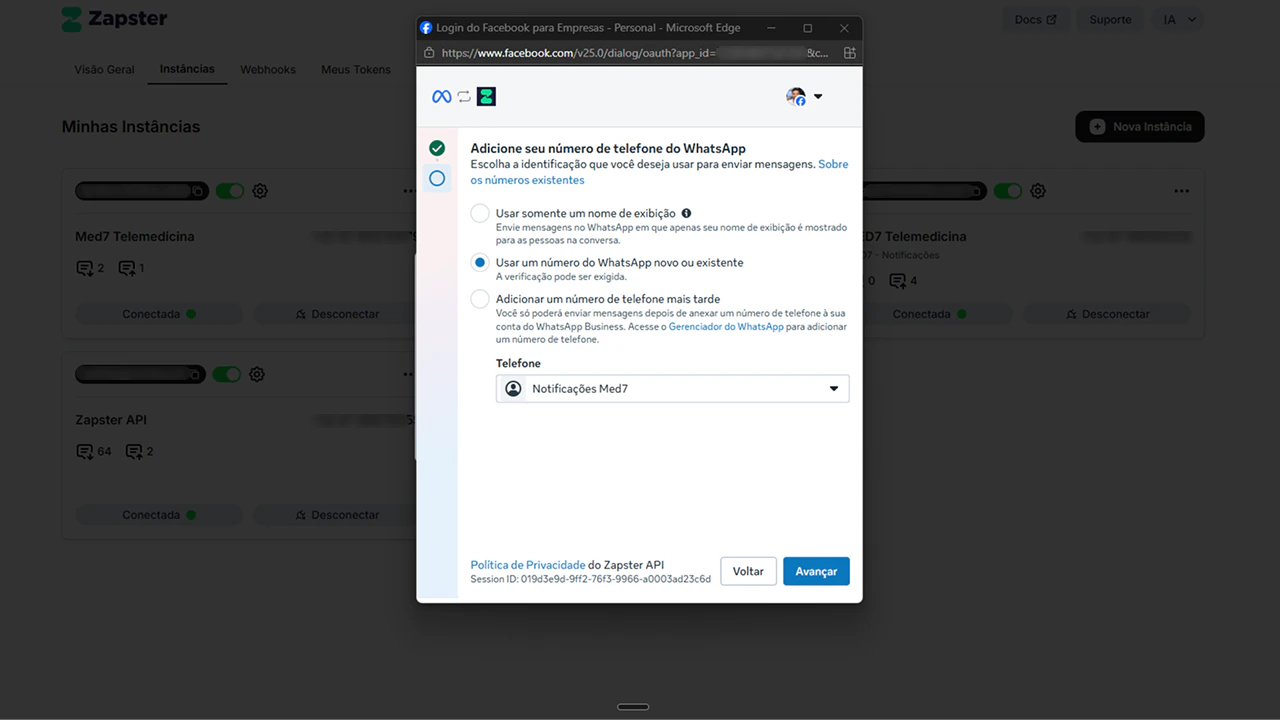
5
Authorize and finish
Confirm the authorization. Zapster will configure everything automatically: webhook, credentials, and the instance will be ready to use.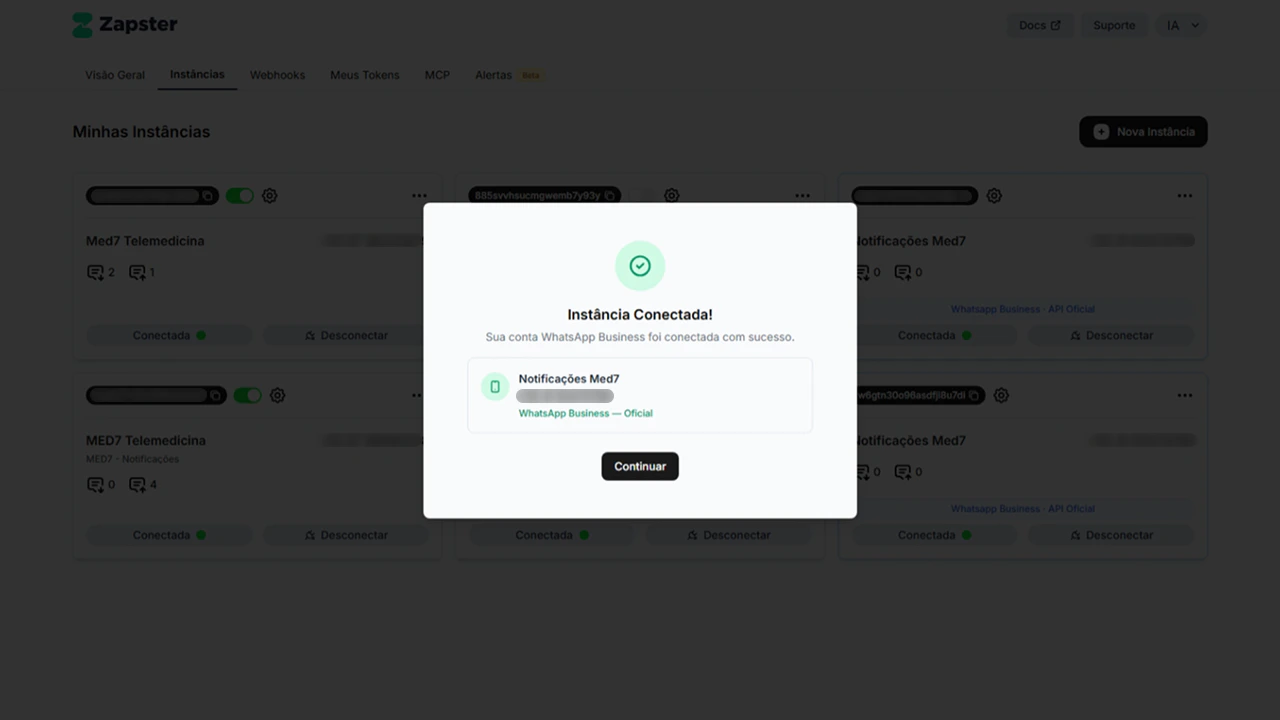
POST /v1/wa/messages endpoint you use for unofficial instances. Nothing changes in your integration.
Method 2: Manual token (advanced)
If you already have a Meta System User Token and prefer to create the instance through the API, you can use the creation endpoint directly.What you will need
Before you start, you need three pieces of information from the Meta Business Manager. Below we show where to find each one.The System User Token needs the
whatsapp_business_management and whatsapp_business_messaging permissions. Without them, the creation will fail.System User Token
The token is generated in the System Users area inside the Meta Business Manager settings.- In the side menu, click Users and then System users.
- Select the user that will connect (or create a new one by clicking Add).
- Click the user and generate a new token with the required permissions.
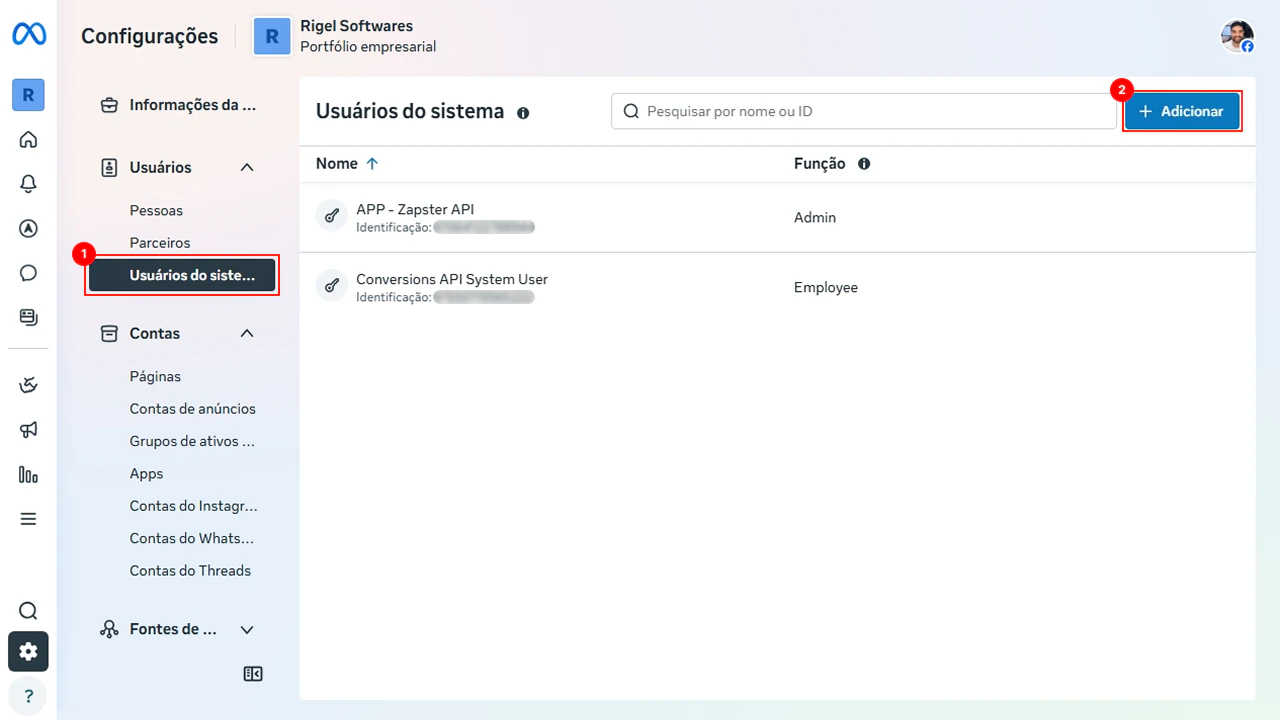
Phone Number ID
The Phone Number ID is the internal identifier Meta uses for your number. It is not the phone number itself.- In the side menu, click WhatsApp Accounts.
- Select the account that contains the desired number.
- Click the phone number to open its details. The Phone Number ID appears in the right-hand side panel, below the display name.
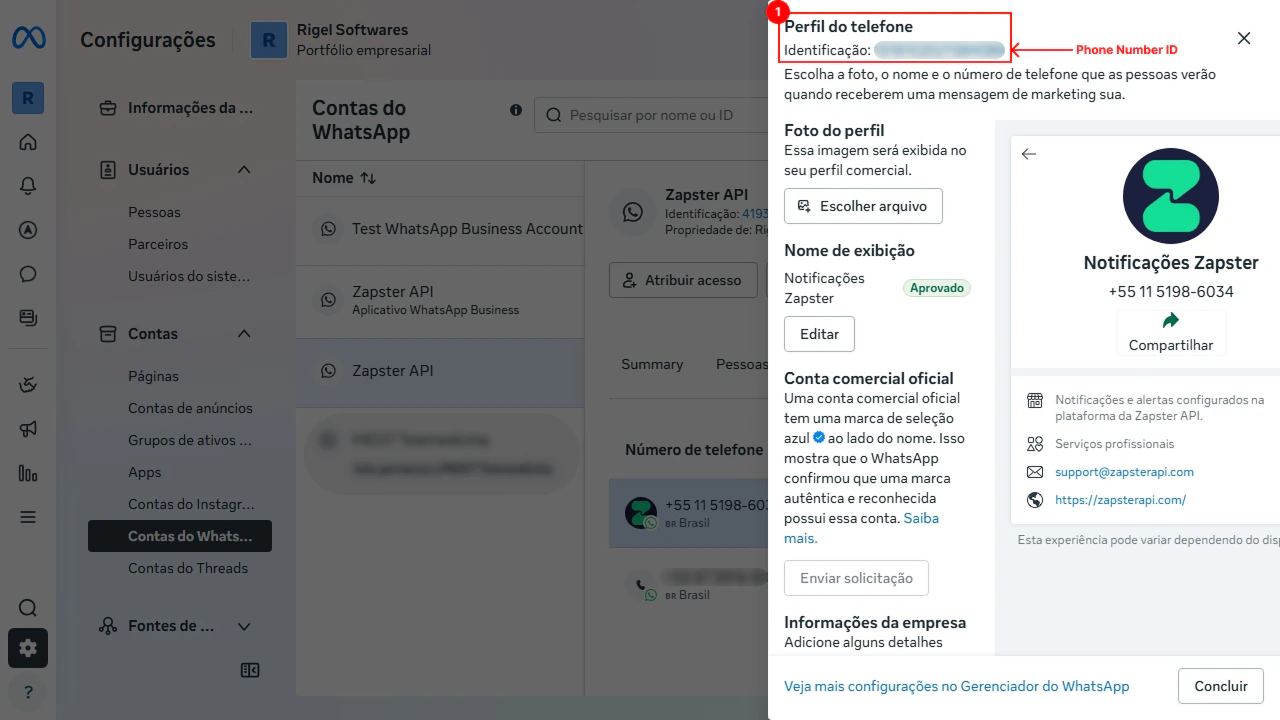
WABA ID
The WABA ID is the identifier of the WhatsApp Business account as a whole (not of the individual number).- In the side menu, click WhatsApp Accounts.
- Select the desired account.
- Click the Phone Numbers tab. The WABA ID appears at the top of the page, next to the account name.
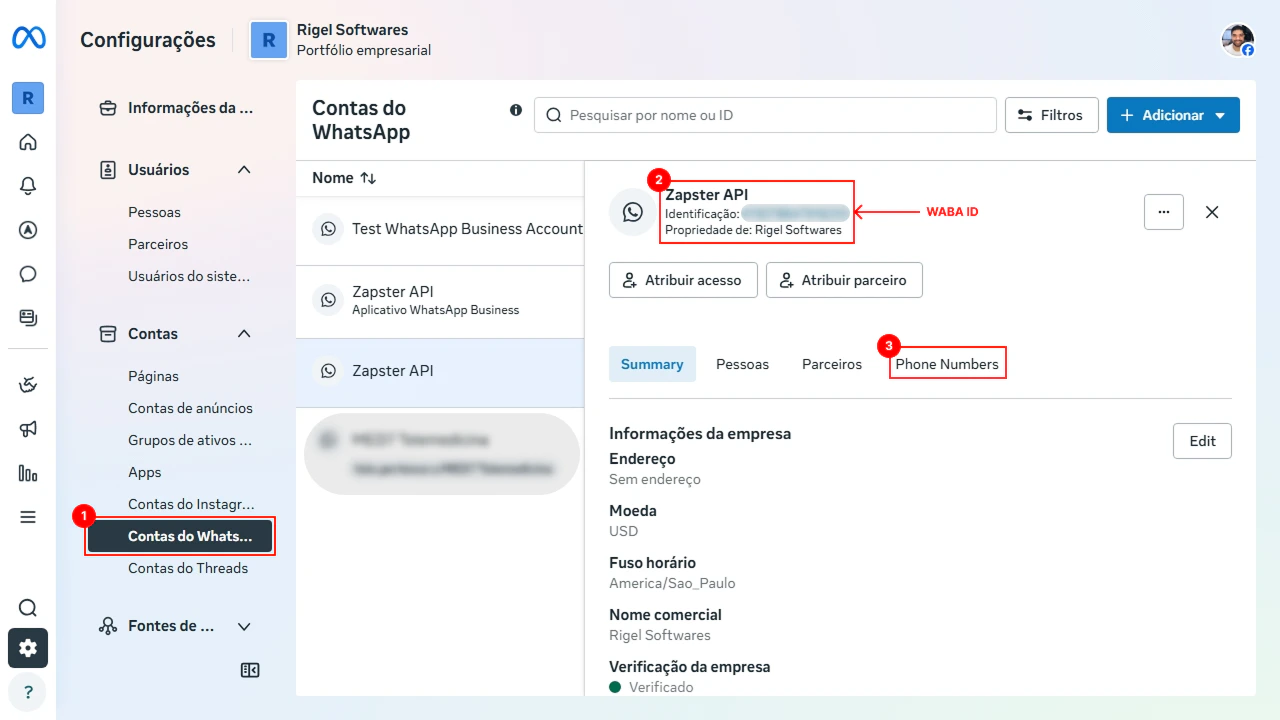
Creating the instance through the API
connected. Zapster registers the webhook with Meta automatically.
Using your own Meta app (BYO app)
If your System User Token belongs to your own Meta app (and not to the Zapster app), the incoming webhooks are signed with your app’s App Secret. So that Zapster can verify the authenticity of those events, provide the optional fields below in thewaba object:
app_secret: the App Secret of your Meta app. When provided, the HMAC signature (X-Hub-Signature-256) of the webhooks is validated against it, ensuring full authenticity verification of the events. It is stored encrypted at rest (AES-256), just likeaccess_token.app_id: the ID of your Meta app. Used only for identification/auditing; it is not a secret and does not take part in signature validation.webhook_verify_token: the webhook verification token. If omitted, Zapster generates a random one. Also stored encrypted at rest.
Data security
Your sensitive data is protected at every step:- Access token: stored with AES-256-CBC encryption, the same standard used by banks and fintechs. The original token is never saved in plain text.
- No exposure: the token does not appear in logs, webhooks, API responses, or the dashboard. Not even the Zapster team has access to the original value.
- Meta webhooks: every event received from Meta is validated by HMAC-SHA256 signature before being processed. Events with an invalid signature are discarded.
What changes in API usage?
Nothing. Once the WABA instance is created, the endpoints are the same:POST /v1/wa/messagesto send messages.DELETE /v1/wa/messages/:idto cancel scheduled messages.GET /v1/wa/messagesto list history.
template field in the body) and do not support sending to groups.